Best Glass Chamfering Machine Supplier in China?
Choosing the best Glass Chamfering Machine supplier in China requires more than comparing prices. A reliable decision begins with machine performance, supplier experience, and after-sales support. Details matter.
In real glass processing workshops, operators notice small differences quickly. A stable machine should produce clean chamfered edges, consistent angles, and minimal surface damage. It should also handle the required glass thickness, dimensions, and production speed. Buyers should examine spindle quality, abrasive compatibility, cooling systems, safety features, and control interfaces. A supplier with practical engineering experience can explain these points clearly, rather than offering only attractive specifications.
Not every supplier fits every factory. Some companies specialize in standard equipment, while others provide customized lines for furniture glass, architectural panels, mirrors, or shower enclosures. Factory visits, sample testing, installation records, and customer references can reveal more than online advertisements. Ask for a test report using your own glass. That evidence is useful.
A trustworthy Chinese supplier should communicate lead times honestly and provide clear documentation. Spare parts availability, remote troubleshooting, operator training, and warranty terms also deserve careful review. Certifications may support credibility, but they do not replace performance testing. No supplier is perfect. Even experienced manufacturers can make mistakes, especially during customization. This guide therefore considers both strengths and limitations when evaluating the best Glass Chamfering Machine supplier in China. The final choice should reflect measurable results, transparent communication, and the long-term needs of your production line.
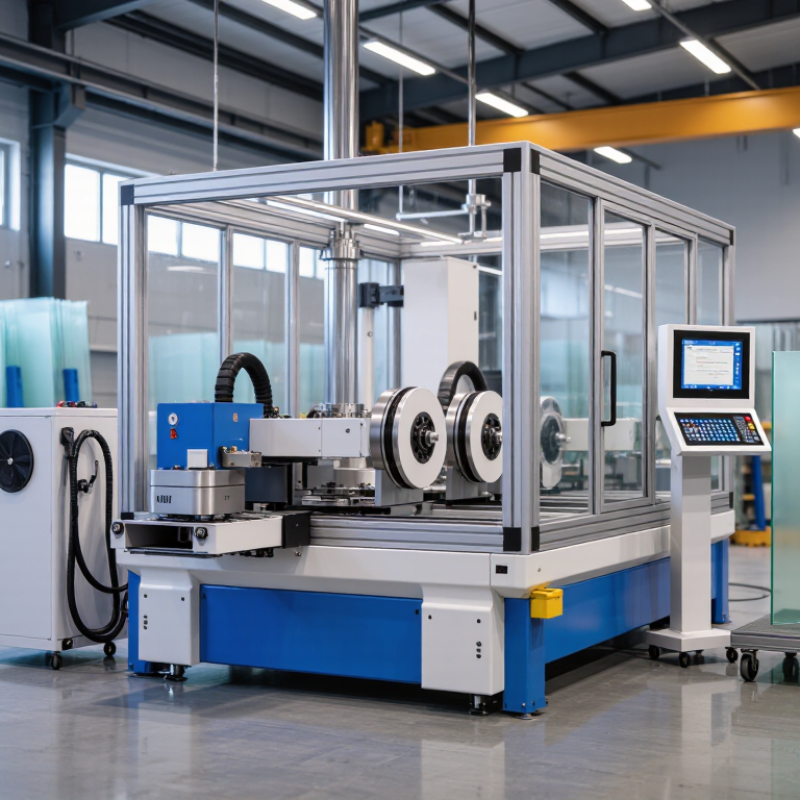
What Is Glass Chamfering? 45° Bevels and 0.1–0.3 mm Edge Tolerance
Best Glass Chamfering Machine Supplier in China?
Glass chamfering removes sharp edges and creates a controlled bevel, commonly at 45°. The process improves handling safety and gives mirrors, furniture glass, and shower panels a refined appearance. A 45° bevel is not merely decorative. Its width, flatness, and surface quality affect fitting accuracy and visible reflections. In practical inspections, buyers often request 0.1–0.3 mm edge tolerance. However, this range is a project specification, not a universal legal standard. It must match the glass thickness, bevel width, wheel condition, and measuring method.
The International Energy Agency’s Buildings 2023 report states that buildings consume about 30% of global final energy. Better glazing quality can support energy performance, although chamfering alone does not improve insulation. A reliable Chinese supplier should provide sample testing, dimensional records, wheel specifications, and repeatability data. Ask how operators measure the edge. Calipers alone can miss local chipping. Digital microscopes and calibrated gauges provide stronger evidence. That assumption is risky.
Tips: Send drawings showing bevel angle, width, tolerance, and corner treatment. Request samples from different production batches. Check the glass under angled light for chips, cloudy bands, and uneven polishing. Confirm whether 0.1–0.3 mm refers to bevel width, edge position, or surface deviation. These terms are often confused. A small caveat matters. Machine speed may rise, but quality can fall when abrasive wheels wear. Insist on trial records before purchase.
Glass Chamfering: 45° Bevels and 0.1–0.3 mm Edge Tolerance
Glass chamfering removes the sharp edge to create a controlled bevel. A 45° chamfer is commonly specified by its angle, while edge quality is evaluated through dimensional tolerance. The chart visualizes the 0.1–0.3 mm tolerance range stated for the chamfered edge.
The midpoint of the stated tolerance range is 0.2 mm. Actual results depend on glass thickness, abrasive condition, feed speed, coolant, and machine calibration.
Which Glass Chamfering Machine Types Suit 3–19 mm Glass Thickness?
Best Glass Chamfering Machine Supplier in China?
Choosing a glass chamfering machine depends heavily on thickness, edge shape, and production volume.
For 3–6 mm glass, a precision straight-line chamfering machine is usually suitable. It needs stable belts, gentle pressure, and fine coolant control. Thin glass can vibrate easily. Small errors may create edge chipping or uneven polishing.
For 6–12 mm glass, standard straight-line machines offer practical performance for furniture panels, doors, and interior glass. They normally support adjustable grinding heads and controlled feeding speed.
For 12–19 mm glass, choose a reinforced heavy-duty model. Stronger conveyors, rigid frames, and higher spindle stability are important. CNC chamfering equipment suits irregular shapes or changing edge angles. However, CNC systems may require more training and maintenance. I have seen workshops buy advanced equipment too early. Their actual orders did not justify the added complexity.
Tips: Test samples across the full 3–19 mm range before purchasing. Check edge quality under bright light. Measure thickness variation, corner consistency, water usage, and daily output. Ask for documented test results, safety protection, spare-part availability, and operator training. A supplier should explain limitations clearly, not promise perfect results. Also inspect the coolant filtration system. Dirty water can reduce polishing quality quickly. Machine selection is rarely perfect on the first attempt; production feedback should guide later adjustments.
How Do CNC Chamfering Machines Reach ±0.1 mm Processing Accuracy?
Best Glass Chamfering Machine Supplier in China?
CNC chamfering machines reach ±0.1 mm accuracy through several controlled processes. A rigid cast frame reduces vibration when the glass contacts the grinding wheel. Precision ball screws, linear guides, and servo motors then control movement with minimal backlash. Linear scales can close the feedback loop and correct small positioning errors.
ISO 230-2:2014 defines methods for testing positioning accuracy and repeatability in machine tools. In practice, technicians should test the machine across its full travel, not only near the center. Thermal growth also matters. A 1°C temperature change can alter steel components by roughly 11 micrometres per metre. That is small, but it affects a tight ±0.1 mm target. NIST measurement guidance also stresses traceable calibration and documented uncertainty.
The measurement system needs equal attention. AIAG’s Measurement Systems Analysis guidance commonly uses 10% of tolerance as a preferred gauge variation limit. For a 0.2 mm total tolerance, the measuring system should ideally contribute no more than 0.02 mm. Diamond wheel wear, glass thickness variation, coolant temperature, and operator loading can still shift results. A perfect number on a brochure is not enough. I would verify repeatability with certified gauges, multiple glass sizes, and at least 30 consecutive samples. That evidence is more useful than one impressive test piece.
What Quality Standards Should Chinese Glass Machine Suppliers Meet?
Reliable glass chamfering machine suppliers in China should meet measurable quality standards, not only display attractive workshop photos. ISO 9001-based procedures can support purchasing, assembly, inspection, and corrective action. Yet certification alone proves little. Auditors should examine material records, calibration dates, and traceability for motors, bearings, belts, and control components. Small details matter.
During a factory acceptance test, the machine should process the buyer’s actual glass thicknesses and shapes. Inspect the chamfer angle, edge brightness, water flow, spindle vibration, and cycle consistency. Measure them. Electrical cabinets need clear wiring, grounding, overload protection, guarded moving parts, and accessible emergency stops. Documentation should include manuals, maintenance intervals, spare-part codes, and realistic noise or power data.
Destination-market safety requirements must be verified before shipment, because one certificate rarely covers every installation. Good suppliers also provide remote troubleshooting and a repeatable acceptance record. However, no supplier gets everything perfect. A missed tolerance or vague test report deserves a documented correction, not a polite promise. Independent inspection can reveal issues that factory demonstrations hide. This step may delay shipment, but it protects production stability and operator safety.
How to Compare China Suppliers by Output, Warranty, and After-Sales Support
Choosing the best glass chamfering machine supplier in China requires more than comparing prices. Compare measurable output first. A supplier should provide tested capacity for your glass thickness, edge angle, and daily production hours. Ask for sample videos, cycle times, rejection rates, and power consumption. A 2024 report by Grand View Research estimates continued growth in the global glass market, increasing pressure on processors to improve consistency and efficiency. Output claims must be verified on your glass, not standard samples.
Warranty terms deserve close inspection. Check whether coverage includes motors, grinding spindles, electrical controls, and alignment systems. Clarify response times for replacement parts. A twelve-month warranty sounds useful, but exclusions can make it weak. ISO 9001 quality guidance emphasizes documented processes and corrective action, so request inspection records, calibration details, and acceptance criteria. Small details matter.
After-sales support often separates a reliable supplier from a difficult one. Ask whether remote diagnosis is available, how quickly engineers respond, and whether manuals include maintenance intervals. The 2023 PMMI report on packaging equipment service trends highlights the growing value of remote support and predictive maintenance. Glass machinery needs similar discipline. Request a spare-parts list with prices and lead times. Keep records.
One practical test is a paid production trial. Measure output after eight hours, not twenty minutes. I have seen impressive demonstrations hide overheating and uneven chamfers. Supplier references should include similar glass sizes and working conditions. Local technicians may reduce downtime, but availability must be written into the contract. Promises are not performance.