What are the Best Solar Applications for Global Buyers?

In today's world, "Solar Applications" have become crucial for sustainable energy solutions. Global buyers are increasingly seeking effective ways to harness solar power. This shift is a response to rising energy costs and environmental concerns. Many industries today rely on solar technologies for their operations.

From residential systems to large-scale solar farms, the applications vary widely. Solar heating, photovoltaic systems, and off-grid solutions represent some top choices. Understanding these solar applications can help buyers navigate their options. Each has its unique benefits and challenges, which must be considered carefully.

Innovative technologies continue to emerge, improving efficiency and affordability. However, many buyers still struggle with initial costs and complex installation processes. These hurdles highlight the importance of expert guidance in making informed decisions. With the right knowledge, buyers can maximize their investments in renewable energy.
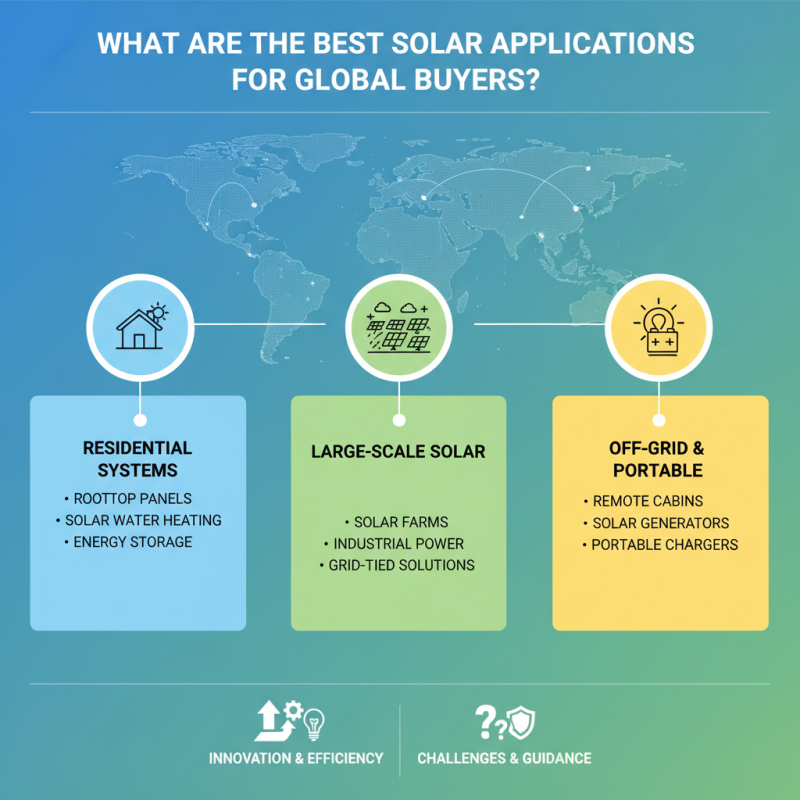
What are the Best Solar Applications for Global Buyers?

Best Solar Applications for Homeowners: A Comprehensive Overview

Homeowners increasingly turn to solar solutions to enhance energy efficiency and reduce bills. Installing solar panels is a popular choice. These systems harness sunlight and convert it into electricity. Decreasing reliance on traditional energy sources can help combat rising utility costs.

Another excellent option is solar water heating. This application uses sunlight to heat water for domestic use. It can significantly reduce energy expenses and is particularly beneficial in sunny regions. Pool heating is another practical application. Homeowners can enjoy a warmer swimming pool without excessive energy costs during the summer months.

However, there are challenges to consider. Installation can be costly upfront. Choosing the right system requires thoughtful research and expert advice. Homeowners may face installation issues due to location or property characteristics. It’s essential to evaluate local regulations and incentives as well. Individual needs can vary widely, so one size does not fit all. Thoughtful planning can lead to substantial long-term benefits.

What are the Best Solar Applications for Global Buyers?

Application Description Benefits Ideal Users
Residential Solar Panels Solar panels installed on rooftops to generate electricity for homes. Reduces electricity bills, eco-friendly, potential tax credits. Homeowners, eco-conscious individuals.
Solar Water Heating Uses solar energy to heat water for domestic or commercial use. Energy efficient, cost savings on water heating. Homeowners, businesses with significant hot water needs.
Off-grid Solar Systems Remote solar power systems that do not connect to the grid. Energy independence, ideal for rural areas. Campers, remote residents, emergency preppers.
Solar-Powered Generators Portable generators powered by solar panels, for charging devices. Quiet, renewable energy source for emergencies. Outdoor enthusiasts, emergency preparedness.
Solar Street Lighting Streetlights powered by solar panels, often found in public spaces. Reduces electricity consumption, lower maintenance costs. Municipalities, parks, and campuses.

Top Solar Technologies for Commercial Use: Maximizing Efficiency

Solar technologies are rapidly evolving, providing commercial buyers with robust options. High-efficiency photovoltaic (PV) panels are among the top choices today. These panels convert sunlight directly into electricity, ideal for large rooftops or expansive ground installations. Enhanced efficiency means more power generation with less space. However, the initial investment can be substantial, leading to reflections on long-term benefits versus immediate costs.

Another promising solar application is solar thermal systems. These systems harness sunlight to produce heat, used for water heating or space heating. They are especially effective in warmer climates. The technology is simple, yet the installation needs careful planning. Inconsistent performance can be a challenge during cloudy days, leading to potential downtime.

Battery storage systems are increasingly integrated with solar setups. They allow businesses to store excess energy for later use, optimizing energy costs. However, these systems can be expensive upfront, requiring a cost-benefit analysis. The evolution of solar technologies offers exciting opportunities, yet buyers must navigate the complexities to maximize benefits.

Innovative Solar Solutions for Rural Electrification

Rural electrification remains a pressing challenge in many parts of the world. According to the International Energy Agency (IEA), around 770 million people still lack access to electricity. Solar energy provides innovative solutions that can transform these communities. Portable solar power units and mini-grid systems are among the most effective applications, offering reliable energy at a low cost.

Solar-powered appliances, like LED lighting and water pumps, can enhance daily life significantly. Often, these solutions can be implemented quickly, with reduced installation times compared to traditional energy systems. Access to solar energy can improve education, healthcare, and economic opportunities in remote areas. A recent report from Bloomberg New Energy Finance highlights that solar energy has the potential to serve 60% of off-grid households by 2030, which strengthens global energy security.

**Tip:** Investing in training local technicians can improve the sustainability of solar projects. Engaging the community ensures knowledge transfer and maintenance support.

Integrating solar solutions in rural electrification requires collaboration among stakeholders. Policymakers should create supportive regulations and funding opportunities for solar projects. Additionally, awareness campaigns can increase adoption rates. The transition to renewable energy, especially in rural areas, must be viewed as a long-term commitment. Establishing a reliable and resilient energy infrastructure supports community development and environmental sustainability.

Best Solar Applications for Global Buyers

This chart represents the market demand for various solar applications, such as rural electrification, water pumping, and solar heating. These values are crucial for understanding where investments and developments in solar technology can have the most significant impact.

Solar Applications in Transportation: A Green Revolution

Solar energy is transforming transportation, driving us towards a greener future. With a rising demand for sustainable solutions, solar applications in vehicles are becoming crucial. Electric vehicles (EVs) now often integrate solar panels. These panels harness sunlight to recharge batteries, extending the range for drivers.

Public transportation is also undergoing a shift. Solar-powered buses and trains significantly reduce emissions. They offer a quieter, cleaner way to commute. However, the infrastructure needs improvement. Integrating solar infrastructure into existing systems can be complex.

Despite advancements, challenges remain. Solar energy is variable and weather-dependent. Creating consistent and reliable transport solutions is essential. Smart technologies can help optimize energy use. As we embrace solar applications, continuous innovation will be key to overcoming hurdles.

Emerging Trends in Solar Energy Usage Across Industries

The solar energy landscape is evolving rapidly. Various industries are adopting solar technology to enhance sustainability. For instance, agriculture is integrating solar panels into farming operations. This not only powers equipment but also supports irrigation systems. Innovative uses, like agrivoltaics, foster dual land use for crops and solar generation.

Construction is another sector seeing solar expansion. Rooftop solar installations are becoming standard in new developments. This trend reduces reliance on grid electricity. However, the integration can be challenging. Builders sometimes face zoning restrictions and infrastructure readiness issues. Each project requires careful planning to balance energy needs and building criteria.

Transportation is also shifting solar. Solar-powered electric vehicles are emerging on the market. These vehicles utilize rooftop panels to extend their range. Yet, this technology is still in its infancy. Challenges remain in efficiency and cost-effectiveness. The industry must navigate these hurdles to achieve broader acceptance and functionality.