Dishwasher Tablets vs Pods Which is Better for You?
When it comes to cleaning dishes, many homeowners face a crucial decision: Dishwasher Tablets Vs Pods. Each product offers distinct advantages and potential drawbacks. Understanding these can lead to better choices tailored to your specific needs.
Dishwasher tablets are often praised for their concentrated formulas. They can tackle tough stains and grease effectively. Many users report cleaner dishes and better results using these tablets. However, some may find them a bit challenging to dissolve in shorter cycles. This could lead to residue on your clean dishes, which can be frustrating.
On the other hand, pods are convenient and easy to use. Their pre-measured doses simplify the washing process. No guesswork is involved, which can save time. Yet, some pods may lack the cleaning power of tablets for heavily soiled pots and pans. This inconsistency can be a point of reflection for those seeking optimal cleanliness. Ultimately, the choice between Dishwasher Tablets vs Pods comes down to personal preference and cleaning requirements.
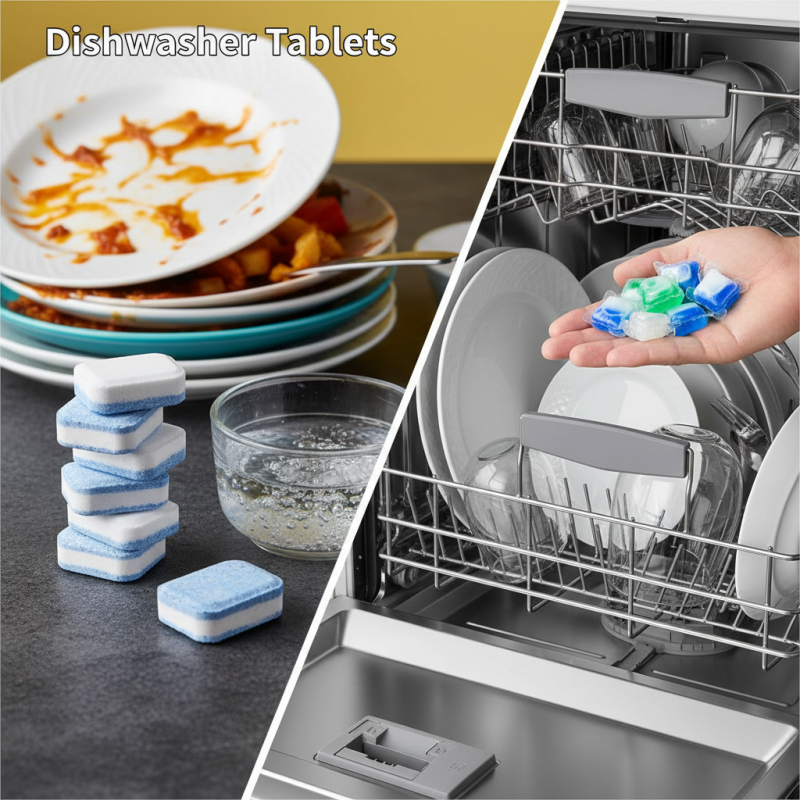
Differences Between Dishwasher Tablets and Pods
When choosing between dishwasher tablets and pods, it's essential to understand their differences. Dishwasher tablets are compact and often contain concentrated cleaning agents. They dissolve in water to release their ingredients gradually. This makes them effective for a thorough clean but may require precise dosage. Users sometimes find them cumbersome to handle.
On the other hand, dishwasher pods are pre-measured and convenient. They come in a softer outer layer that dissolves quickly. This feature can be appealing for those seeking simplicity. However, pods may lead to overuse if users are not cautious with portioning. The ingredients may also vary in effectiveness based on water temperature and hardness levels.
Both options have their pros and cons. Tablets might offer better cleaning power in tough situations, while pods deliver convenience for everyday use. Experimenting with both can help you decide what works best in your kitchen.
Effectiveness: How Well Do They Clean Dishes?
When it comes to cleaning dishes, dishwasher tablets and pods both have strong supporters. Research from industry experts indicates that tablets can offer a more consistent cleaning performance. They generally dissolve evenly, leading to thorough cleaning of pots and pans. However, some users report that tablets can leave residue if not used correctly. This issue may stem from incorrect loading or using the wrong wash cycle.
On the other hand, dishwasher pods are convenient and easy to use. Many consumers appreciate their pre-measured doses. They often contain similar cleaning agents as tablets. However, they can sometimes fail to disintegrate fully, leaving dishes less than spotless. A survey indicated that nearly 30% of users experienced issues with food particles remaining on dishes when using pods.
While both options aim to deliver sparkling results, the effectiveness can vary. Factors like water temperature, hardness, and load size all play significant roles. Users should experiment with both options to discover what works best for their unique situations. The choice between tablets and pods may come down to personal preferences and specific dishwashing habits.
Convenience and Storage: Which Option is Easier to Use?
When choosing between dishwasher tablets and pods, convenience is key. Dishwasher pods are pre-measured and easy to use. Just toss one into your dishwasher, and you're ready to go. A survey conducted by the International Housewares Association revealed that 78% of users prefer this method for its simplicity. Pods can quickly dissolve in water, ensuring an even distribution of cleaning agents. This can enhance the overall cleaning performance.
On the other hand, dishwasher tablets require a bit more effort. Users must ensure proper storage, which can sometimes lead to accidental damage. If moisture affects a tablet, its effectiveness diminishes significantly. According to a study by the American Cleaning Institute, 45% of users reported encountering problems with tablets when stored improperly. While they can be cost-effective in bulk, one must be careful, as improper handling can lead to wastage.
Ultimately, personal preference plays a big role. People looking for ease may lean toward pods. However, those who prefer bulk buying may appreciate the value of tablets. Both options carry their pros and cons, and the decision often comes down to individual lifestyle and usage habits.
Cost Analysis: Tablets vs. Pods Over Time
When considering dishwasher tablets versus pods, cost analysis plays a crucial role. Research suggests that tablets often appear cheaper per load. A 2022 report from the Appliance Manufacturers Association indicated that tablets can cost around $0.15 per wash, while pods might hover closer to $0.25. However, this value can be misleading. Tablets can sometimes require more product per wash, especially if you have hard water.
Over time, the cost-effectiveness of these options can vary. For a family running the dishwasher daily, savings from tablets can accumulate. Yet, pods often offer convenience. They require no measuring and minimize spillage. A survey by Clean Kitchen Insights showed that 45% of users prefer pods for ease. However, that convenience comes with a higher long-term cost.
It's also essential to reflect on effectiveness. Some consumers report that tablets clean better, especially on tougher stains. Yet, pods dissolve quickly, which can be beneficial for quick washes. This area is still debated among users. The choice is often subjective, influenced by individual needs. Balancing cost with performance remains a key challenge.
Dishwasher Tablets vs Pods: Cost Analysis Over Time
Environmental Impact: Which Option is More Eco-Friendly?
When considering dishwasher tablets and pods, their environmental impact is crucial. Eco-friendliness is evaluated based on packaging and ingredients. Tablets often use less plastic than pods, reducing landfill waste. According to a 2021 industry report, over 300 million tons of plastic waste is generated annually. Choosing products with minimal packaging can significantly reduce this figure.
However, it's important to consider the ingredients in these products. Many pods contain phosphates and chlorine, which pose risks to aquatic ecosystems. The Environmental Protection Agency warns that such chemicals can lead to harmful algae blooms. In contrast, some tablets use biodegradable components, which are safer for the environment.
While tablets may have a lower carbon footprint, their efficacy in cleaning should not be ignored. Not all tablets dissolve easily in cold water, potentially leaving residue. Eco-conscious consumers should look for certifications like Green Seal on products. This ensures that products meet specific environmental standards. Ultimately, choice involves weighing convenience against environmental responsibility.
Dishwasher Tablets vs Pods: Environmental Impact Comparison
| Feature | Dishwasher Tablets | Dishwasher Pods |
| Packaging | Often made of plastic, not biodegradable. | Usually comes in multi-layer wrappers which can be recyclable. |
| Ingredients | May contain phosphates and enzymes. | Often contains surfactants and environmentally harmful chemicals. |
| Water Usage | Requires standard water levels for use. | Can be more efficient with water usage. |
| Dissolving Time | Takes longer to dissolve, may leave residue if improperly loaded. | Quickly dissolves, resulting in minimal residue. |
| Eco-Friendliness | Some brands focus on eco-friendly formulations. | Not as focused on eco-friendly ingredients. |