Why Choose Solar Panels for Home Energy Savings and Sustainability Benefits
As the world moves towards more sustainable energy solutions, many homeowners are considering the benefits of solar panels for home energy needs. The transition from traditional energy sources to solar power not only supports environmental conservation but also offers significant financial savings. Solar panels for home use have become increasingly popular due to their ability to harness renewable energy, reduce reliance on fossil fuels, and decrease monthly utility bills.
Investing in solar panels can lead to long-term economic advantages. Homeowners can often benefit from various incentives, tax credits, and rebates, which can effectively lower the initial installation costs. Furthermore, as energy prices continue to rise, generating one's own electricity through solar panels can provide substantial savings over time.
In addition to the financial benefits, choosing solar panels for home energy promotes sustainability by reducing carbon footprints and supporting cleaner air initiatives. In a time when climate change poses significant threats to our planet, utilizing solar energy helps create a more sustainable future for generations to come. By embracing solar technology, homeowners can play a vital role in this global effort, making a positive impact both locally and globally.

Benefits of Solar Panels for Home Energy Efficiency
Solar panels are a crucial investment for homeowners seeking to enhance their energy efficiency while embracing sustainable practices. One of the primary benefits of solar panels is their ability to significantly reduce electricity bills. By harnessing the sun's energy, homeowners can generate their own power, minimizing reliance on utility services. This not only leads to immediate savings but also protects homeowners from fluctuations in energy prices, making budgeting for energy costs more predictable.
In addition to financial savings, solar panels contribute positively to environmental sustainability. By utilizing renewable energy, homeowners can decrease their carbon footprint and lessen the impact of fossil fuel consumption on the planet. This renewable technology helps in combating climate change by reducing greenhouse gas emissions, promoting cleaner air, and preserving natural resources. As solar technology continues to advance, its efficiency and accessibility are improving, making it a more attractive option for families looking to make eco-friendly choices while increasing their home's energy efficiency.
Cost Savings Achieved Through Solar Energy Investment
Investing in solar panels for home energy can lead to significant cost savings, which is one of the most compelling reasons for homeowners to make the switch. Initially, the installation of solar panels may seem like a large financial commitment, but the long-term benefits outweigh these upfront costs. By harnessing the power of the sun, homeowners can drastically reduce their electricity bills, as solar energy is a renewable resource that can supply a substantial portion of their energy needs. Additionally, many regions offer incentives, such as tax credits and rebates, which can further decrease the initial expenditure and accelerate the return on investment.
Moreover, using solar energy not only translates to lower utility bills but also protects homeowners from rising energy costs. Traditional energy prices can fluctuate significantly due to market dynamics, whereas solar energy becomes relatively stable once the system is installed. Over time, the savings accumulate, enabling homeowners to allocate these funds towards other essential expenses or savings. As energy efficiency continues to be a critical issue, investing in solar panels also reflects a homeowner's commitment to sustainability, demonstrating how individual choices can contribute to broader environmental goals while simultaneously enhancing personal financial well-being.
Environmental Impact: Reducing Carbon Footprint with Solar Power
Solar power presents a transformative way to reduce our carbon footprint and make a positive environmental impact. Traditional energy sources, such as coal and natural gas, contribute significantly to greenhouse gas emissions, which are a major driver of climate change. By harnessing the sun's energy, households can minimize reliance on fossil fuels, leading to a substantial decrease in carbon emissions. Each solar panel installed is a step towards cleaner air and a healthier planet, as it effectively captures renewable energy while emitting little to no pollution.
Beyond reducing greenhouse gases, solar panels also promote sustainability in other crucial ways. Utilizing solar energy decreases the demand for resource-intensive energy production methods and helps preserve natural habitats disrupted by mining and drilling. Furthermore, solar technology contributes to energy independence, allowing communities to generate their own power and reduce vulnerability to fluctuating energy prices. Transitioning to solar power is not just an individual benefit but a collective movement towards a sustainable future—a crucial strategy in combating climate change and protecting our environment for future generations.
Carbon Emissions Reduction through Solar Energy Adoption
This bar chart illustrates the estimated annual carbon emissions reduction achieved by different sectors through the adoption of solar energy. Residential areas are projected to reduce approximately 2,100 metric tons of carbon emissions annually, while commercial sectors may reduce around 4,500 metric tons, industrial sectors about 8,000 metric tons, and agricultural sectors roughly 1,300 metric tons.
Government Incentives for Home Solar Panel Installation
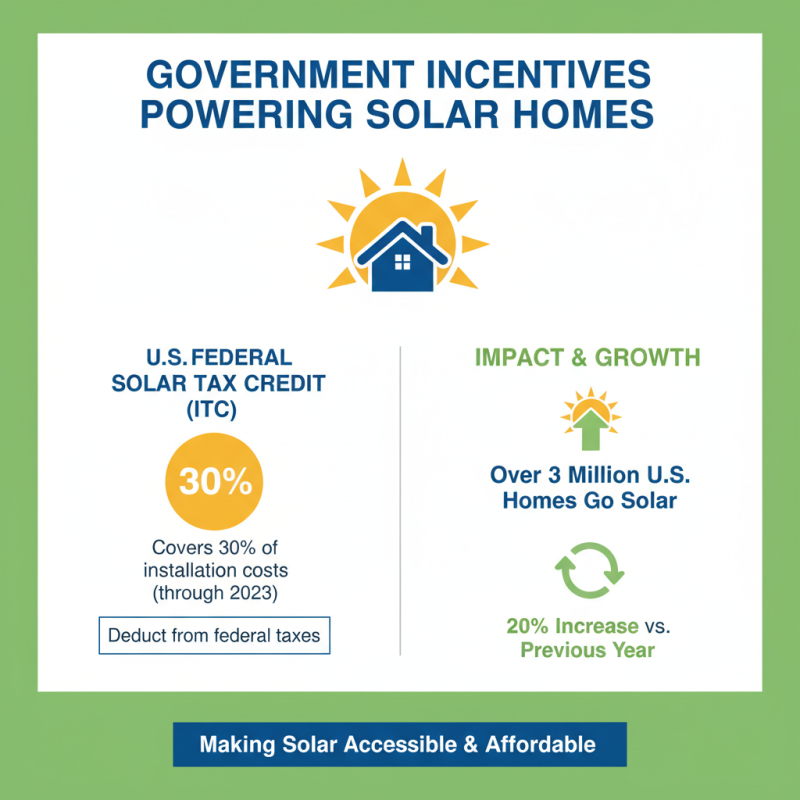
Government incentives play a crucial role in making solar panel installations more accessible and affordable for homeowners. The federal government in the United States, for instance, offers a solar investment tax credit (ITC) that allows homeowners to deduct a significant percentage of the installation costs from their federal taxes. As of 2023, this credit stands at 30% for systems installed through the end of the year, making solar energy a financially attractive option. According to the Solar Energy Industries Association (SEIA), this incentive has contributed to a dramatic increase in residential solar installations, with over 3 million homes now powered by solar energy, representing a 20% increase compared to the previous year.
Additionally, many state and local governments provide their own incentives, which can include rebates, grants, or property tax exemptions for solar energy systems. A report by the National Renewable Energy Laboratory (NREL) indicates that these local incentives can significantly enhance the overall savings for homeowners. Some states even have programs that allow for performance-based incentives, rewarding homeowners for the energy their solar systems generate. By leveraging these government incentives, homeowners can reduce their initial investment and enjoy long-term savings on energy bills, while simultaneously contributing to a more sustainable and environmentally friendly future.
Long-Term Sustainability: Solar Energy as a Renewable Resource
Solar energy stands out as a leading renewable resource, offering numerous benefits for long-term sustainability. According to the U.S. Department of Energy, solar power has the potential to meet around 40% of the country’s electricity demands by 2035, significantly reducing reliance on fossil fuels. This shift not only mitigates greenhouse gas emissions but also lessens air pollution, benefiting public health and the environment. As solar technologies advance, their efficiency continues to improve, making them a more viable option for homeowners looking to contribute to a sustainable future.
When considering solar panels, it's essential to evaluate the initial investment in the context of long-term savings. The National Renewable Energy Laboratory suggests that residential solar installations can save homeowners an average of $20,000 over 20 years. Additionally, many states offer incentives such as tax credits and rebates, further enhancing the financial appeal.
Tips for Homeowners:
1. Assess your home’s solar potential by checking local sunlight exposure and understanding your energy consumption patterns.
2. Investigate available financial incentives in your area to maximize your savings.
3. Consider investing in a solar battery storage system to maximize the use of generated energy, especially during peak hours.
Choosing solar panels not only aids in energy savings but also plays a crucial role in fostering a resilient and sustainable energy future.