China Top 10 Solar Installation Companies and Costs
China’s solar market is enormous, but choosing an installer still comes down to local details. The National Energy Administration reported that China added about 277 gigawatts of solar capacity in 2024, bringing total installed capacity to roughly 887 gigawatts. That scale supports a crowded supplier market. It does not make every quotation comparable.
For a useful comparison, this guide examines ten installation companies alongside the factors shaping solar installation cost: system size, module and inverter selection, roof condition, labor, and grid connection. The International Renewable Energy Agency reported that the global weighted-average levelized cost of utility-scale solar electricity fell 12% in 2023, to USD 0.044 per kilowatt-hour. That is a generation-cost benchmark, not a household installation price. The distinction matters. A rooftop quote and a utility-scale project budget measure different things.
IEA Executive Director Fatih Birol called solar “the new king of electricity” in the agency’s World Energy Outlook 2020. His comment reflects solar’s growing competitiveness, but it cannot predict a homeowner’s final bill. Company estimates may differ even for similar-looking roofs. A shaded panel, older wiring, or a longer grid connection can change the numbers. One caution: advertised prices often leave out site-specific work. Ask what the quote includes, and compare the same system assumptions. The cheapest figure may not tell the whole story.
China’s Solar Installation Industry: Market Structure and Service Types
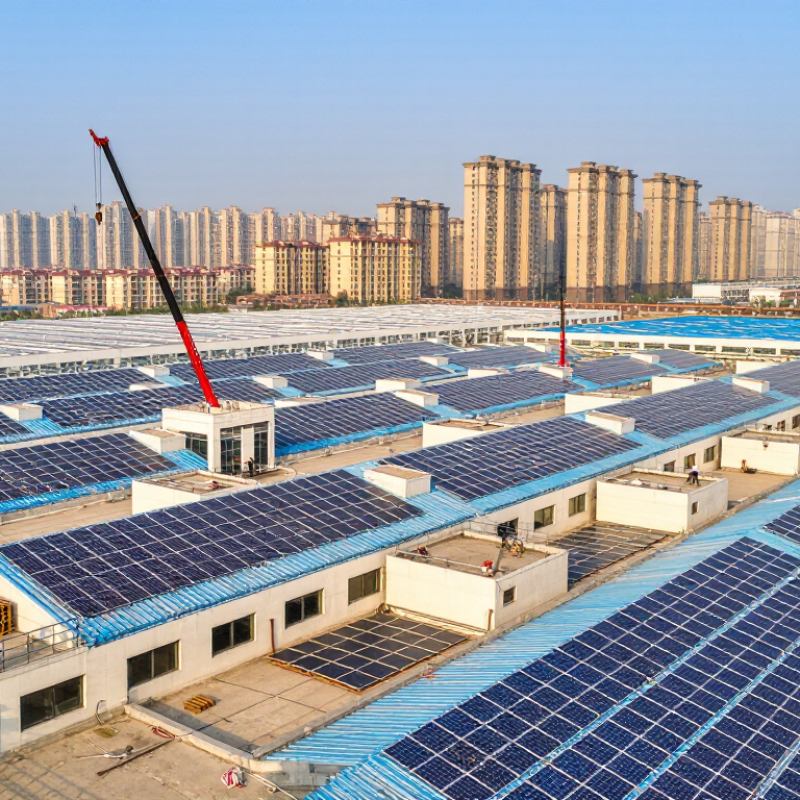
China’s solar installation market has several layers. Manufacturers and equipment distributors supply panels, inverters, mounting systems, and monitoring tools. Project developers or engineering contractors coordinate design, procurement, and construction, while local installation teams handle roof work and electrical connections. In smaller projects, one contractor may manage most stages. Details matter.
Service types depend on the customer and site. Residential work often includes a roof inspection, system design, installation, grid connection coordination, and basic performance monitoring. Commercial projects may add structural checks, load analysis, and plans for working around ongoing business operations. Utility-scale installations require broader land assessment, grid planning, and construction management. Not every roof.
Costs vary with system size, roof condition, equipment choices, labor, and connection requirements. A shaded roof or aging structure can add work that a headline price may not show. Ask for an itemized quotation covering equipment, installation, commissioning, and after-sales support. Check what the stated warranty includes, and whether monitoring or maintenance visits cost extra. One weakness in many comparisons is that they treat unlike projects as equivalent; a clear scope is more useful than a low price alone.
China Top 10 Solar Installation Companies and Costs - China’s Solar Installation Industry: Market Structure and Service Types
The table compares ten common solar installation service categories in mainland China. It is not a ranking of companies. Cost figures are indicative planning ranges in RMB per watt for turnkey PV systems, not supplier quotations; actual prices depend on location, project design, equipment, and contract scope.
| No. | Installation Service Type | Typical Project / Customer | Indicative Turnkey Cost (RMB/W) | Common Service Scope | Key Cost Considerations |
|---|---|---|---|---|---|
| 1 | Residential rooftop PV | Homes and rural households; typically small systems | 3.0–5.0 | Site assessment, system design, installation, inverter setup, and grid-connection coordination | Roof condition, system size, travel distance, and local connection requirements |
| 2 | Small commercial rooftop PV | Shops, offices, and smaller commercial buildings | 2.8–4.5 | Engineering, procurement, construction, commissioning, and basic monitoring setup | Roof access, electrical upgrades, and project scale |
| 3 | Industrial rooftop PV | Factories and large warehouses with substantial roof area | 2.3–3.8 | Structural and electrical surveys, EPC delivery, commissioning, and optional operations support | Roof reinforcement, fire-safety measures, and consumption or export arrangement |
| 4 | Utility-scale ground-mounted PV | Large solar farms developed on suitable land | 2.0–3.2 | Project engineering, procurement, construction, testing, and grid-connection works within the agreed scope | Land preparation, foundations, transmission access, and terrain |
| 5 | Agrivoltaic installation | Projects combining PV generation with agricultural use | 2.8–4.8 | Specialized layout, elevated or spaced structures, installation, and coordination with land use | Clearance height, structural design, crop requirements, and site access |
| 6 | Fishery-solar installation | PV arrays installed above or alongside aquaculture areas | 3.0–5.0 | Water-area layout, corrosion-aware structures, electrical installation, and commissioning | Water depth, foundation method, corrosion protection, and access for maintenance |
| 7 | Building-integrated PV (BIPV) | Buildings where PV materials form part of the roof or façade | 4.0–8.0+ | Building-envelope coordination, customized design, PV installation, and electrical integration | Custom materials, façade or roof specification, waterproofing, and architectural requirements |
| 8 | Solar carport installation | Commercial, industrial, or public parking areas | 3.5–6.0 | Canopy structures, PV modules, electrical works, and optional EV-charging preparation | Steelwork, foundations, drainage, and charger scope |
| 9 | Off-grid or hybrid PV installation | Remote sites or facilities needing backup or limited-grid operation | 3.5–7.0 | PV, inverter, system controls, and commissioning; storage may be designed as a separate package | Battery capacity, backup duration, and remote-site logistics; battery costs are excluded from this range |
| 10 | PV repowering and operations & maintenance | Existing systems requiring component replacement, upgrades, or ongoing service | Scope-dependent | Inspection, fault diagnosis, cleaning, monitoring, inverter replacement, or system upgrades | Pricing depends on asset condition, service frequency, replacement parts, and contract duration |
Cost note: The ranges are broad indicative estimates for comparison, not verified quotes or a guaranteed market average. They generally exclude battery storage, financing, land acquisition, taxes where separately charged, and major off-site grid upgrades. Confirm inclusions, warranty terms, and grid-connection responsibilities in each project proposal.
Related Posts
-
How to Create Your Own DIY Solar System for Home Use?
-
What Is the Average Cost of Solar Panels by Type?
-

How to Choose the Best RV Solar Panels in 2026?
-
Top Tips for Choosing Off Grid Solar System Solutions?
-
Challenges Faced with 400 Watt Solar Panel Installation
-

Innovative DIY Solar System Ideas Transforming Renewable Energy Accessibility